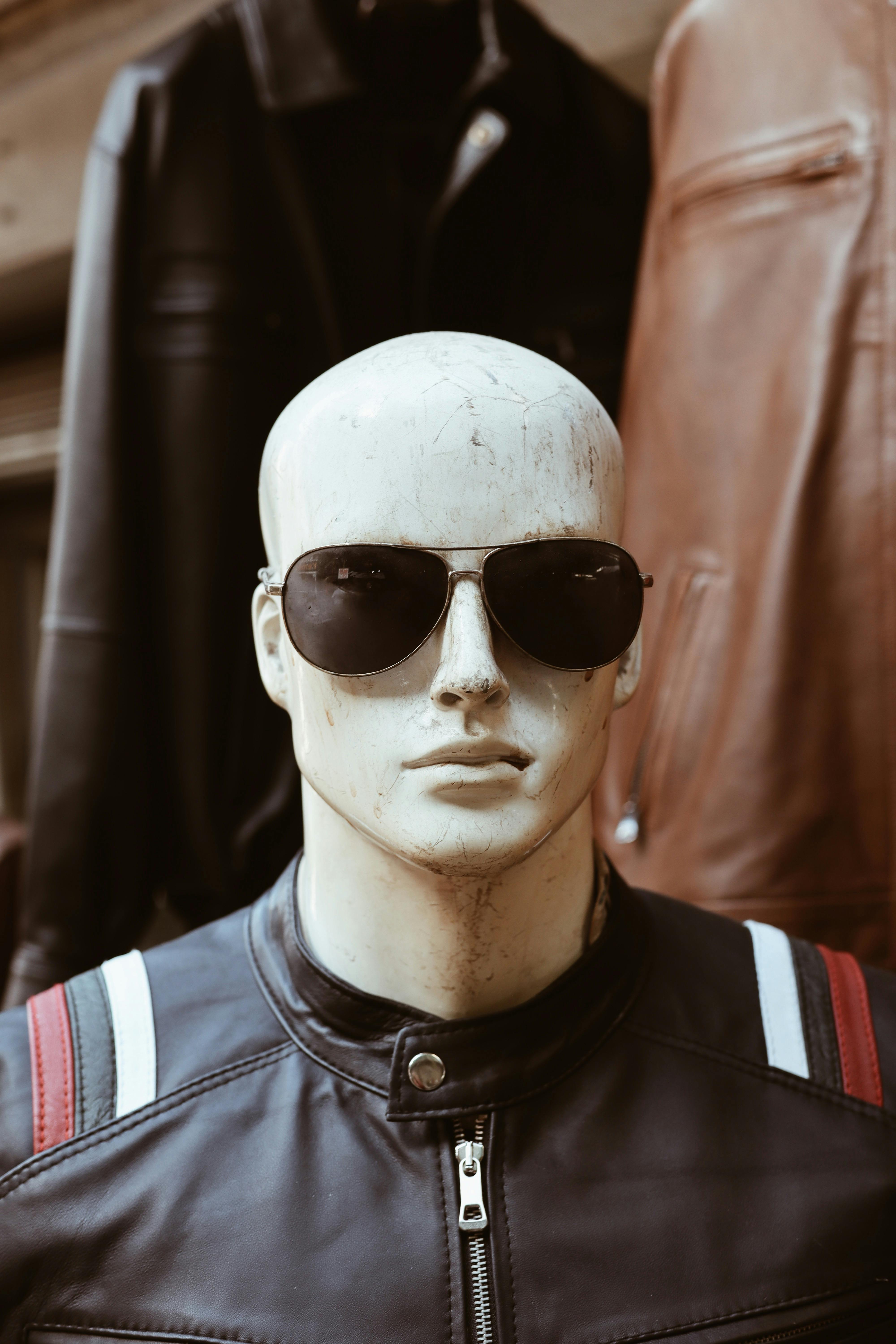
In 1936, Bausch and Lomb produced a teardrop-shaped sunglass with a thin metal frame for the United States Army Air Corps. The design brief was purely functional: pilots needed eye protection that covered their full field of vision without obstructing the instrument panel. The resulting frame, wide at the top and tapering to a point at the bottom, followed the geometry of the human eye socket. It was an engineering solution, not a fashion statement.
Within two decades, it became the most recognized sunglass shape on Earth. That transformation, from military tool to cultural icon, is not as natural as it seems. It required specific cultural conditions, deliberate commercial strategy, and a series of visual associations that rewired what the shape meant in public consciousness.
The function that created the form
The aviator’s teardrop shape was not arbitrary. Pilots looking downward at instruments needed coverage below the eye line that conventional frames did not provide. The wide bridge accommodated oxygen masks. The thin metal construction minimized weight during long missions. Every element of the design answered a specific operational requirement.
This matters because it established the aviator’s foundational identity: this is a serious object for serious people doing serious work. Before it was fashion, it was equipment. That origin story never fully disappeared from the frame’s cultural coding, and it is precisely what makes the aviator function differently from every other sunglass shape.
When someone puts on aviators, they are borrowing from a visual vocabulary of competence, authority, and controlled risk. They may not articulate it that way, but the association is operating beneath the surface.
The postwar translation
After World War II, returning servicemen brought their military-issue sunglasses into civilian life. This is the critical transition point. An object that existed in a closed military context, where its meaning was purely functional, entered open civilian culture, where meaning is constructed through association and aspiration.
The aviator in a cockpit means “I fly planes.” The aviator on a street corner means something entirely different. It means “I carry myself with the confidence of someone who flies planes.” The frame became a vehicle for borrowed authority, a way for civilians to access the visual language of military competence without the military context.
This translation was not accidental. By the late 1950s, the manufacturers understood what they were selling. Marketing shifted from functional claims about UV protection and glare reduction to aspirational imagery of confident, capable men in civilian settings wearing military-derived frames. The product hadn’t changed. The story had.
The problem of ubiquity
Every design object that achieves cultural dominance eventually faces the same crisis: when everyone wears it, what does it signal? The aviator’s meaning diluted as its adoption widened. By the 1970s, the frame was worn by police officers, drug dealers, politicians, musicians, suburban fathers, and fashion models. Each context added a new layer of meaning while eroding the clarity of the original signal.
This is the aviator problem in design terms: a shape so versatile in its associations that it begins to mean everything and therefore nothing. The teardrop frame can signal authority, rebellion, nostalgia, fashion awareness, or total indifference to fashion, depending entirely on who is wearing it and in what context.
Few other design objects have achieved this level of semiotic saturation. Most sunglass shapes carry relatively stable meanings. Round frames signal intellectualism or countercultural affiliation. Cat-eyes signal femininity and retro awareness. Wayfarers signal casual cool. The aviator, by contrast, has become a blank canvas that absorbs the identity of its wearer rather than projecting one.
The military residue
Despite this dilution, the military origin has never fully disappeared. Research in social perception has consistently shown that people in aviator-style sunglasses are rated as more authoritative and confident than the same individuals in other frame shapes. The teardrop silhouette still carries a trace of its cockpit origins, a residual signal of competence that persists even when the wearer has never been near an aircraft.
This residual meaning is what keeps the aviator commercially viable decade after decade while other shapes trend and fade. It offers wearers a baseline of perceived authority that requires no other fashion context to activate. You can wear aviators with anything, in any setting, and the frame will do some amount of image work on your behalf.
What the aviator teaches about design and culture
The aviator’s trajectory illustrates a principle that applies broadly across designed objects: functional origins create durable cultural associations. Objects designed for performance carry an embedded narrative of competence that survives their transition into aesthetic contexts.
Military watches, leather jackets, cargo pants, and work boots all follow the same pattern. They were designed for specific operational purposes, entered civilian culture through postwar adoption or subcultural appropriation, and retained a trace of their functional identity that gives them a cultural weight beyond their appearance.
The aviator is the most successful example of this pattern in eyewear. It began as a solution to a pilot’s problem and became a tool for civilian identity construction. Understanding that journey is understanding how design objects accumulate meaning, and why some shapes endure while others disappear.
The teardrop frame will outlive every trend that follows it. Not because it is the most beautiful shape, but because its origins gave it a story that culture cannot forget.