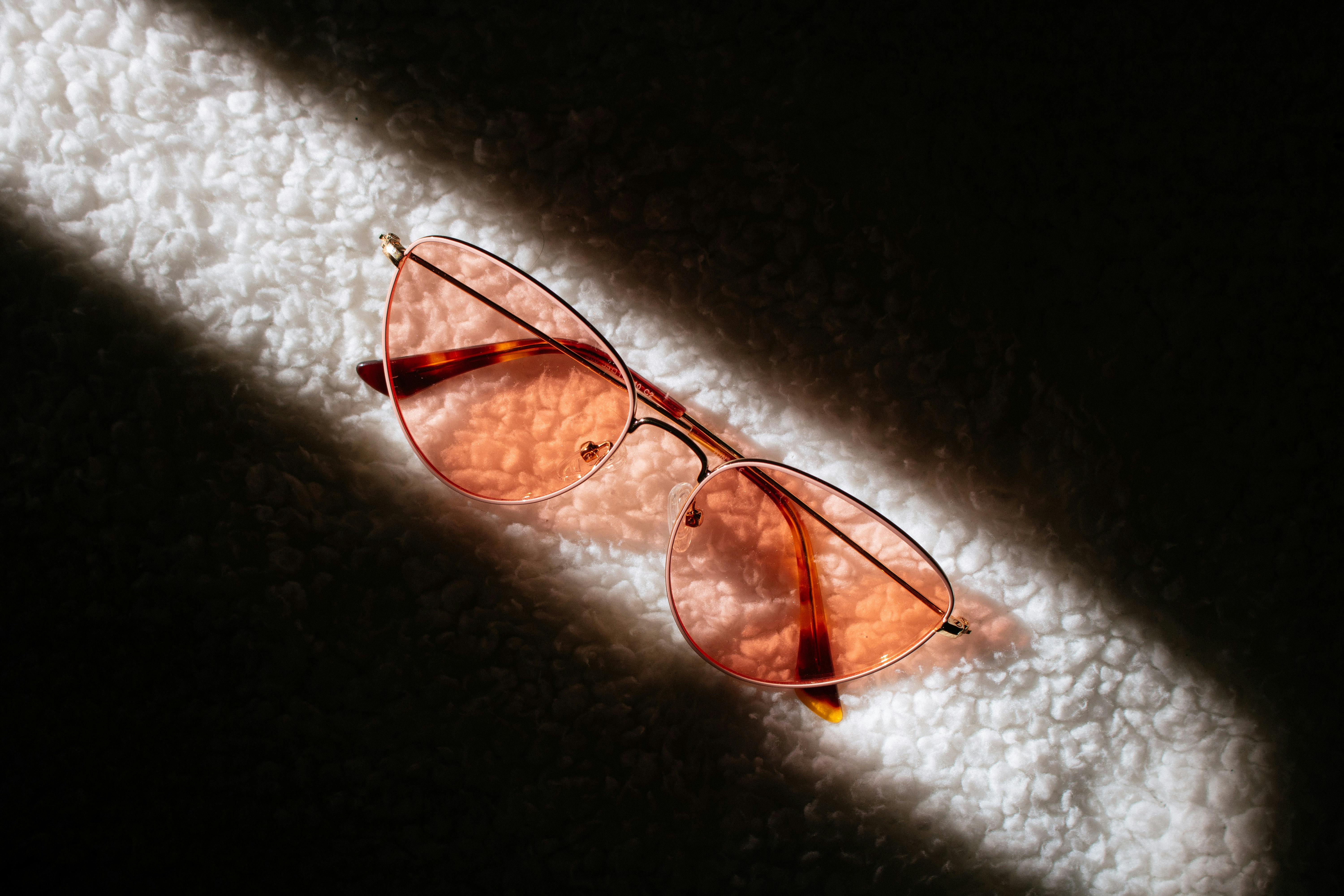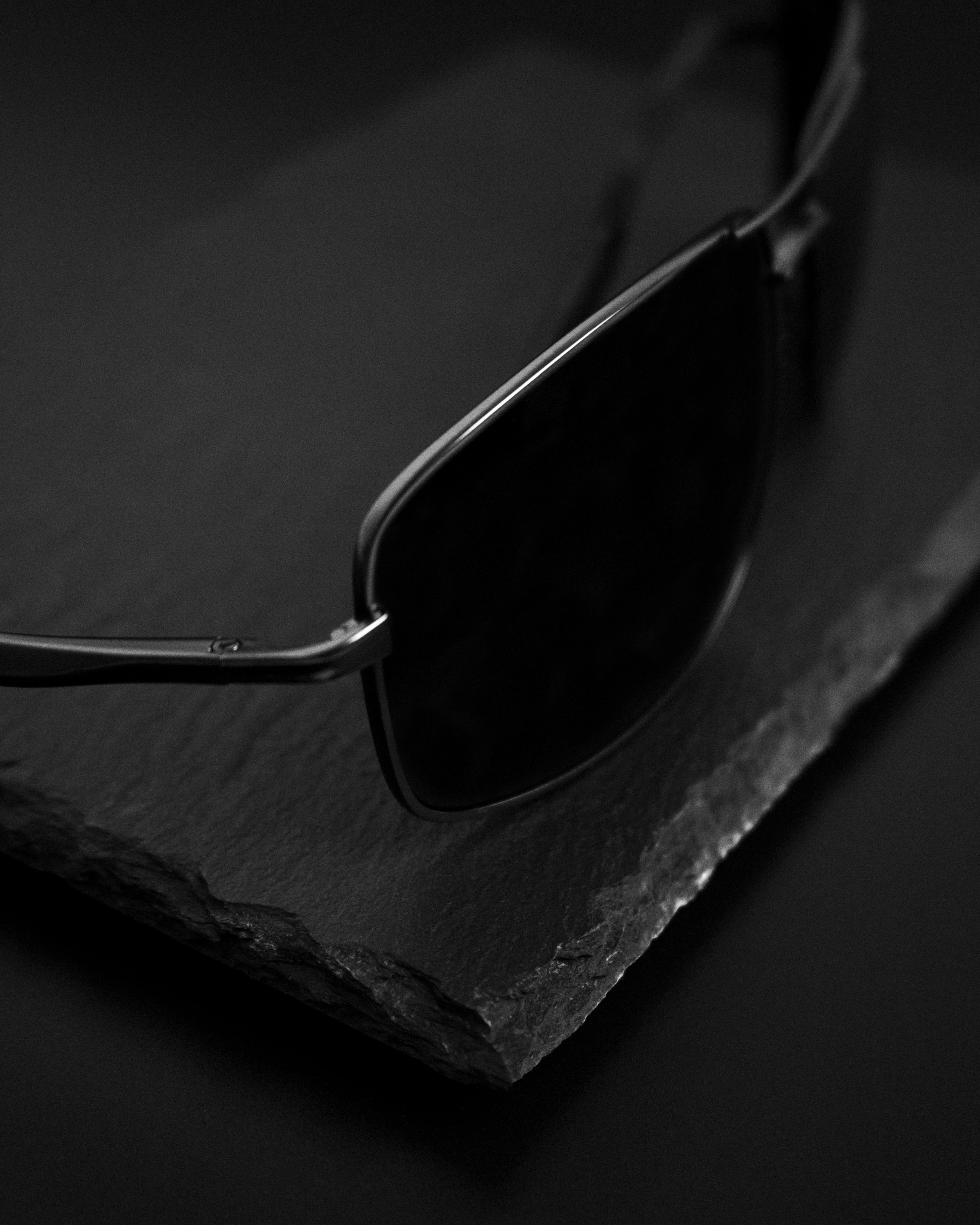
Dieter Rams never designed a pair of glasses. This is worth noting because his ten principles of good design, articulated through decades of work at Braun, describe what excellent eyewear should be with more precision than most eyewear designers achieve deliberately.
The principles were not written for any specific product category. They were written about design itself. Applying them to eyewear reveals how far most frames fall from the standard Rams set, and how the few that meet it succeed precisely because they follow these principles without necessarily knowing they exist.
Good design is innovative
Innovation in eyewear does not mean novelty. It means solving the persistent problems of the form in new ways. A hinge mechanism that folds more smoothly. An acetate formulation that is lighter without losing rigidity. A nose bridge geometry that distributes weight more evenly across different face shapes.
Most eyewear innovation is invisible. It happens in the engineering, not the aesthetics. The frames that most people consider innovative, unusual shapes, extreme colors, bold decorative elements, are usually just novel. Innovation and novelty are different things. Rams knew this. The eyewear industry frequently forgets it.
Good design makes a product useful
Sunglasses exist to protect eyes from UV radiation and reduce glare. Everything else, the style, the status signaling, the fashion statements, is secondary to this function. A frame that looks extraordinary but causes headaches after two hours has failed at being useful. A frame that looks ordinary but fits perfectly and protects completely has succeeded.
This principle is the one most frequently violated in fashion eyewear. Aesthetics override ergonomics. Visual impact takes precedence over lens quality. The frame is designed to be photographed, not worn.
Good design is aesthetic
Rams did not reject beauty. He rejected beauty that came at the expense of function. Good design, in his framework, is beautiful precisely because it fulfills its purpose elegantly. The aesthetic quality emerges from the fitness of the solution, not from applied decoration.
In eyewear terms, a frame that fits your face well and serves its purpose with minimal excess material is inherently more beautiful, by Rams’s standard, than a frame encrusted with detail that serves no functional purpose. This is a challenging position for an industry built on decorative differentiation.
Good design is unobtrusive
This is where Rams’s principles conflict most directly with the eyewear market. Frames are marketed as statement pieces, conversation starters, personality projectors. Rams would argue that a product designed to demand attention has confused its role. The product should serve the user, not the other way around.
Applied to eyewear, unobtrusiveness does not mean invisibility. It means the frame should integrate with the wearer’s face rather than competing with it. The best frames are the ones that make people say “you look good” rather than “I like your glasses.” The distinction is subtle but Rams would consider it fundamental.
Good design is long-lasting
Trends are the enemy of longevity. A frame designed to capture a specific moment in fashion is designed to become obsolete when that moment passes. Rams would advocate for frames that avoid temporal markers, shapes and details that place them firmly in a particular year.
This is why certain frames endure for decades while others feel dated within two seasons. The enduring frames have been designed with restraint, avoiding the decorative choices that feel current now but will feel specific later. Longevity in eyewear, as in all design, requires the discipline to leave things out.
The remaining principles
Rams’s principles of thoroughness, environmental friendliness, honesty, and minimal design all apply to eyewear with similar directness. Thoroughness means attention to every detail of the frame, including the parts the wearer never sees. Environmental consideration means material choices that account for the full lifecycle of the product. Honesty means the frame does not pretend to be something it is not through faux materials or misleading construction. Minimal design means every element serves a purpose.
What Rams would wear
If forced to speculate, the answer is almost certainly a thin metal frame with no decorative elements, excellent materials, and a fit calibrated precisely to his face. Something that disappeared into his appearance and let his work be the most interesting thing about him.
This is the standard. Few frames meet it. The ones that do are worth finding.