There is a specific quality to the long-established independent optical shop that almost no other retail format preserves. The optician who has been fitting frames in the same location for twenty years knows things about how frames relate to faces that no algorithm has catalogued. They know how acetate behaves over time, how different nose bridge configurations settle differently on different anatomies, which frames that look wrong on the display look right when worn, and which ostensibly perfect frames have a subtle alignment issue that reveals itself only after an hour of wear.
This knowledge is embodied, tacit, and accumulated. It is not transferable to a product description. It is not searchable. It is located in a person in a place.
What the optical shop preserves
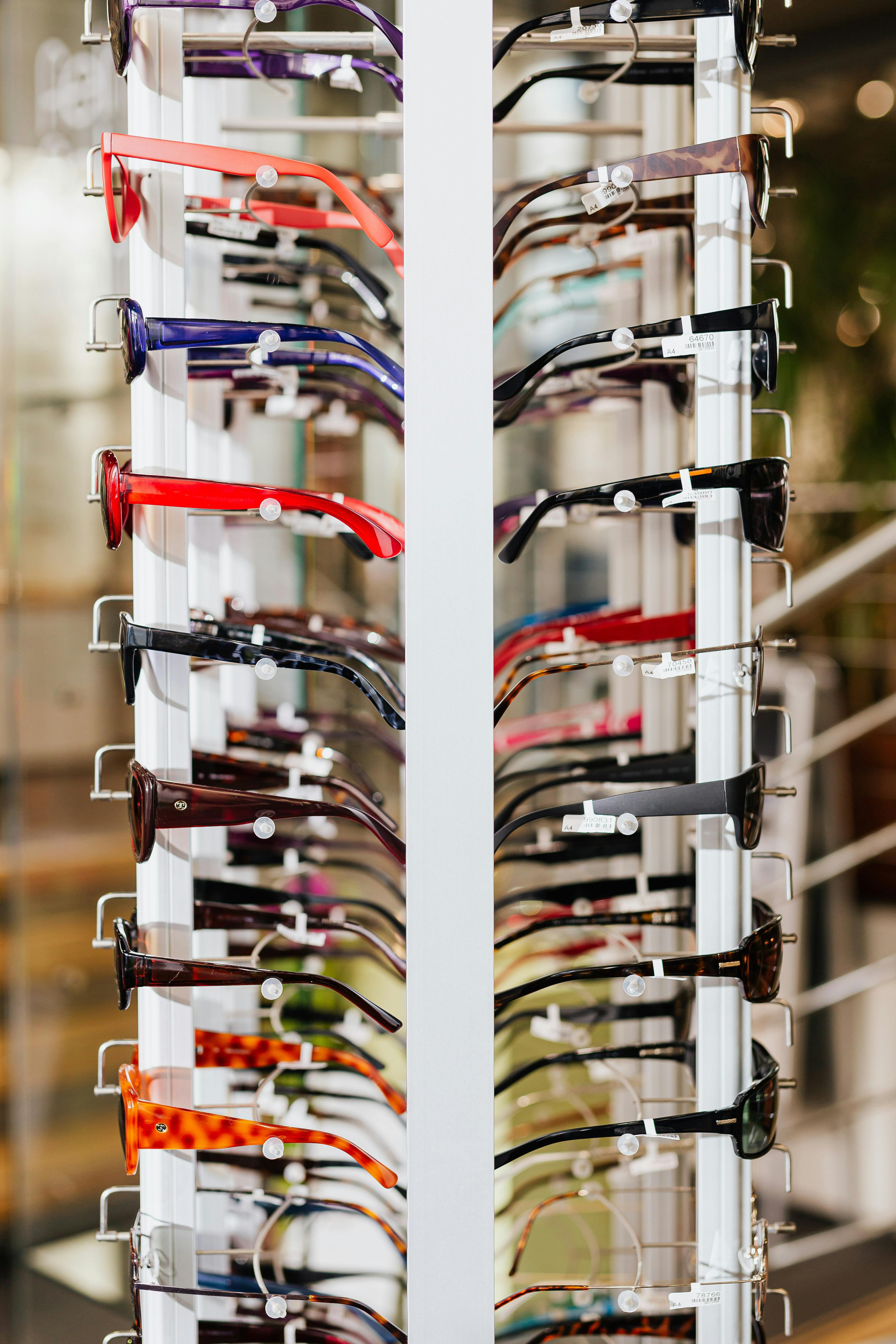
The independent optical shop at its best is a curatorial institution as well as a retail space. The frames on display represent selections made by someone with a developed aesthetic position and a knowledge of what will work in that specific context — for the local clientele, with the local lighting conditions, given the trends and counter-trends visible in the surrounding culture.
This curation is invisible in the way that all good curation is invisible. You walk into a well-chosen optical shop and the range feels right without your necessarily being able to articulate why. The absence of bad frames is as important as the presence of good ones, and the absence requires active selection: saying no to what does not belong alongside saying yes to what does.
The selection systems that have replaced or supplemented the optical shop — online retail, the eyewear sections of large fashion retailers, opticians in large chain optical stores — are less good at this in different ways. Online retail provides access to enormous ranges but removes the contextual intelligence that makes the selection coherent. Chain optical stores operate to purchasing agreements and brand relationships that constrain curation. Large fashion retailers treat eyewear as a category among many, without the depth of knowledge that a specialist brings.
The fitting knowledge problem
The specific form of tacit knowledge that the experienced optician holds — how to fit a frame correctly to an individual face — is under pressure from two directions simultaneously.
From the supply side: the consolidation of optical retail into chains and the growth of DTC eyewear reduces the context in which fitting knowledge is developed and transmitted. Fewer young opticians are being trained in independent shops where this knowledge lives; more are entering the field through chains where standardized fitting protocols replace developed individual expertise.
From the demand side: the growth of DTC eyewear has normalized purchasing frames without fitting. Most online eyewear buyers are either guessing at fit based on their knowledge of what has worked before, or using virtual try-on tools that approximate but do not replicate the information available from an actual physical fitting. This normalization reduces the perceived value of fitting knowledge, which reduces the incentive to seek out the places where that knowledge is most developed.
The result is a gradual erosion of the knowledge base without an obvious mechanism for its reconstruction. The fitting expertise that an experienced independent optician holds is not being recorded or codified — it is not that kind of knowledge. When the person who holds it retires, the knowledge does not transfer automatically to their successor.
What independent optical shops are doing well
In the cities where independent optical culture is most developed — New York, Los Angeles, London, Tokyo, Paris, certain secondary cities with strong design cultures — the independent optical shop is in a specific kind of health. These shops are not competing on price or range. They are competing on knowledge, curation, and the experience of being fitted by someone who knows what they are doing.
This is not a retreat strategy. It is a genuine competitive position that the chain and online models cannot occupy. The question is how widely it can be maintained: whether the conditions that make strong independent optical culture possible — foot traffic in design-aware urban areas, customers who value the expertise premium, supply relationships with independent frame producers — can be maintained outside the specific urban contexts where they currently thrive.
The DTC relationship
The rise of DTC eyewear brands might seem to be in straightforward competition with independent optical retail. The relationship is more complicated.
Some independent optical shops have found that carrying DTC-adjacent independent labels — brands that sell primarily online but also through select retail partnerships — allows them to offer a range that feels current and distinctive in ways that the standard wholesale catalog does not. The DTC brands benefit from the credibility of physical retail placement. The optical shop benefits from the design energy of brands that are making interesting decisions outside the established wholesale structure.
This relationship is still being worked out. The wholesale economics are different from standard optical trade purchasing, and the fitting and aftercare questions are not fully resolved. But the intersection is real and produces something that pure DTC and pure conventional wholesale cannot separately: frames with genuine design identity, selected by knowledgeable curators, fitted by people who understand faces.
What the loss would mean
The scenario in which independent optical culture fully gives way to chain and online models is not abstract. It is already the dominant pattern in smaller cities and suburban areas, where independent optical shops have largely been replaced by chain stores and where the tacit knowledge question has already resolved — not through preservation, but through attrition.
What would be lost in a full transition is harder to quantify than the number of closed shops. It is the specific kind of attention to the relationship between a designed object and a human face that the independent optical tradition at its best embodies. That attention has produced things — the fitting traditions of specific optical cultures, the regional aesthetic variations in frame preference and design, the accumulated knowledge of how materials and shapes age on different people — that cannot be reconstructed from product databases.
The preservation of that knowledge base requires the preservation of the institutions that carry it. Which requires, in turn, that enough people choose to seek out the thing that only those institutions can provide.